Automated Journalism
Automated Journalism
Automated Journalism
Overview
Humans vs. Robots: Can AI News Be Trusted?
Are robots stealing the journalist's job, or can they create trustworthy news? Dive in to discover the surprising findings on structure, engagement, and who gets the credit (or blame) in the age of automated journalism.
My contribution
Research planning
Research execution
Data collection
Data analysis
Interpreting results
Report writing
Documentation
The team
Anagha Shinde
Prof. Grace Eden (Supervisor)
Year
2023
Overview
Humans vs. Robots: Can AI News Be Trusted?
Are robots stealing the journalist's job, or can they create trustworthy news? Dive in to discover the surprising findings on structure, engagement, and who gets the credit (or blame) in the age of automated journalism.
My contribution
Research planning
Research execution
Data collection
Data analysis
Interpreting results
Report writing
Documentation
The team
Anagha Shinde
Prof. Grace Eden (Supervisor)
Year
2023
Overview
Humans vs. Robots: Can AI News Be Trusted?
Are robots stealing the journalist's job, or can they create trustworthy news? Dive in to discover the surprising findings on structure, engagement, and who gets the credit (or blame) in the age of automated journalism.
My contribution
Research planning
Research execution
Data collection
Data analysis
Interpreting results
Report writing
Documentation
The team
Anagha Shinde
Prof. Grace Eden (Supervisor)
Year
2023
Process
Abstract
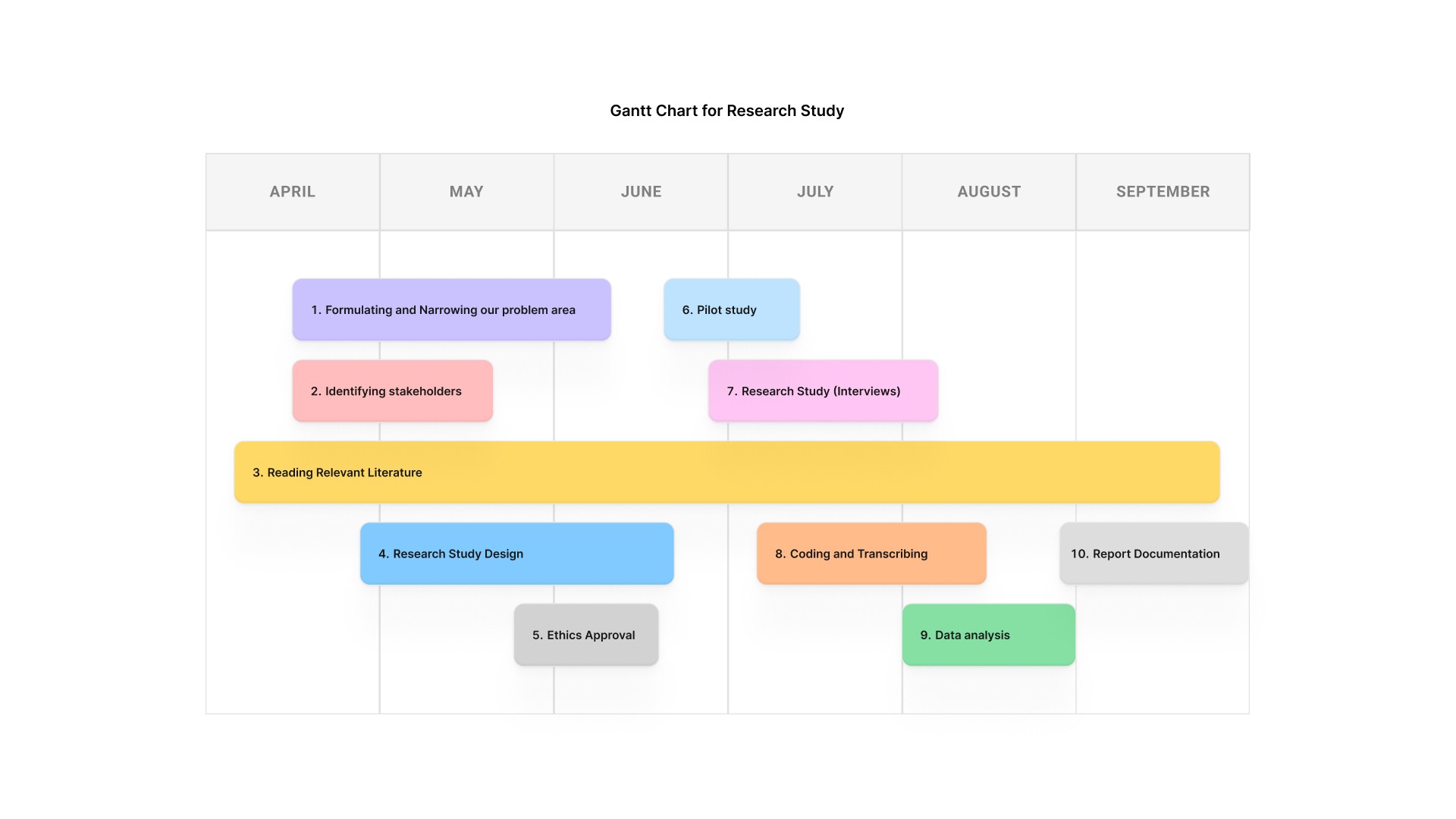
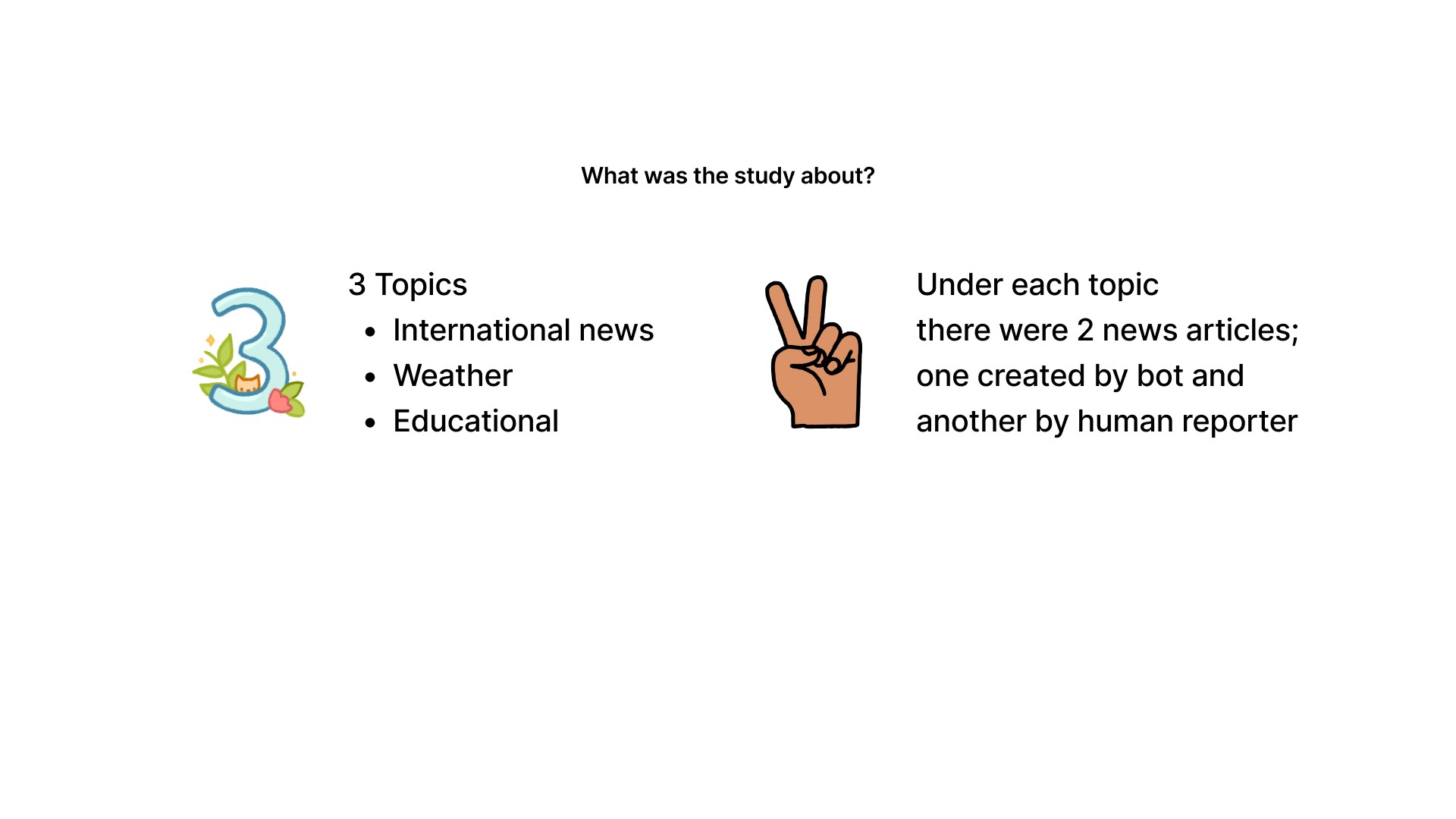
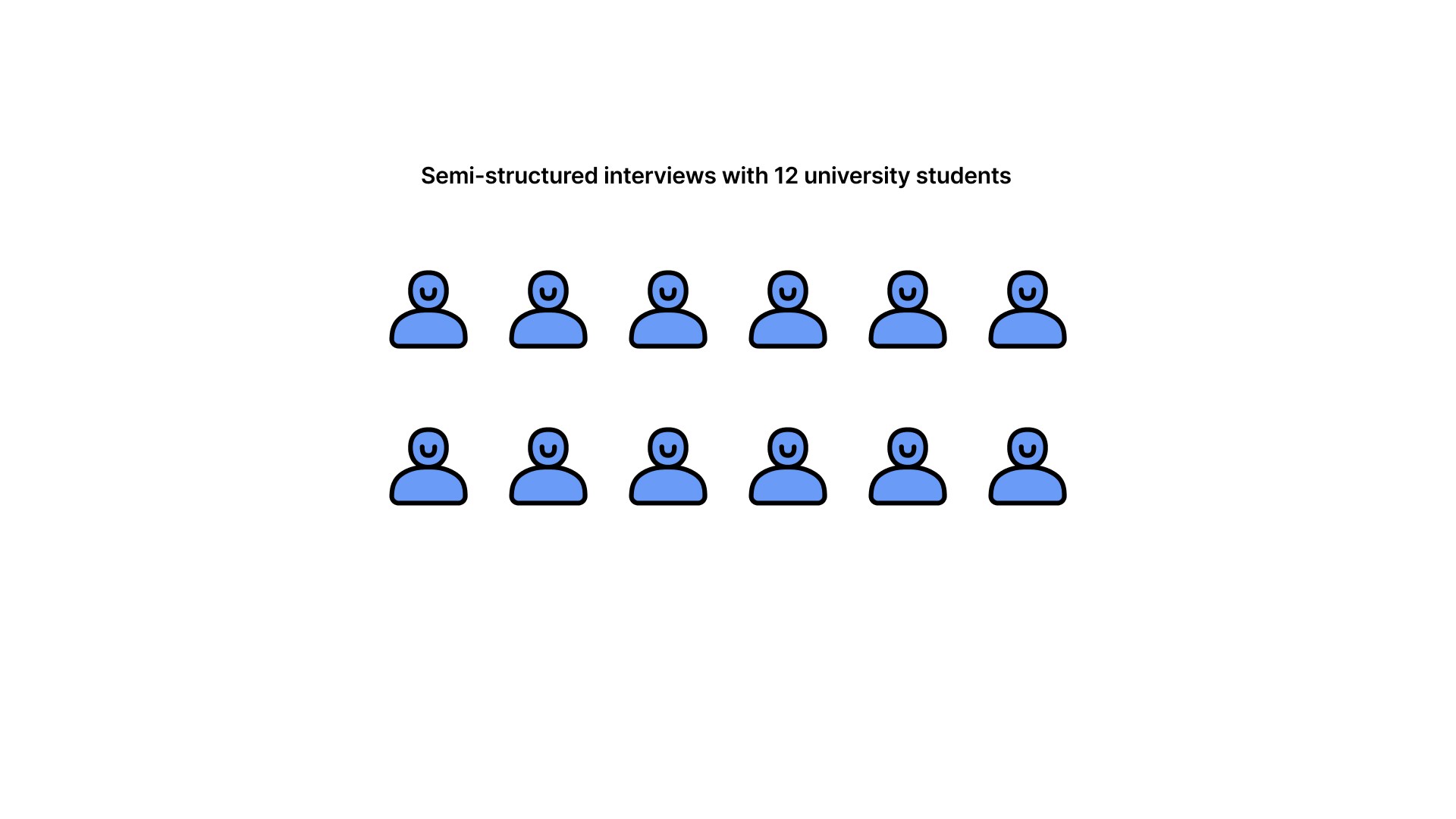
The domain of automated journalism is experiencing swift expansion and holds the potential to transform both the production and consumption of news. This study examines the news readers' perceptions of news articles generated by bots and human journalists. Using an exploratory research design, this in-depth qualitative study selected participants based on their familiarity with automated news content.
Process
Abstract
The domain of automated journalism is experiencing swift expansion and holds the potential to transform both the production and consumption of news. This study examines the news readers' perceptions of news articles generated by bots and human journalists. Using an exploratory research design, this in-depth qualitative study selected participants based on their familiarity with automated news content.
Process
Abstract
The domain of automated journalism is experiencing swift expansion and holds the potential to transform both the production and consumption of news. This study examines the news readers' perceptions of news articles generated by bots and human journalists. Using an exploratory research design, this in-depth qualitative study selected participants based on their familiarity with automated news content.
Outcome
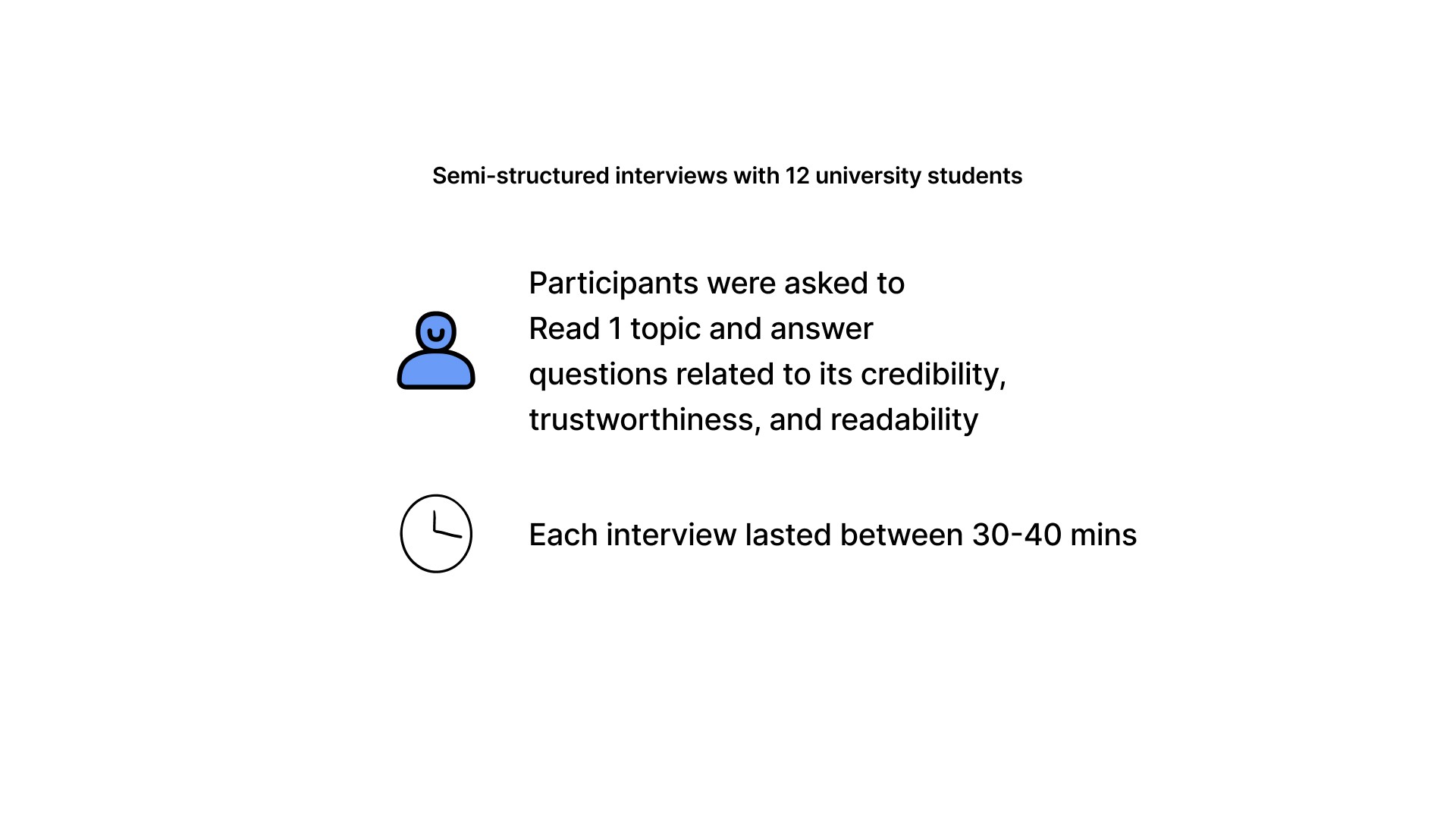
Following every interview, the researcher transcribed the interviews word-for-word. To maintain the dependability and precision of the transcripts, the researcher revisited the transcripts while simultaneously listening to the audio recordings.
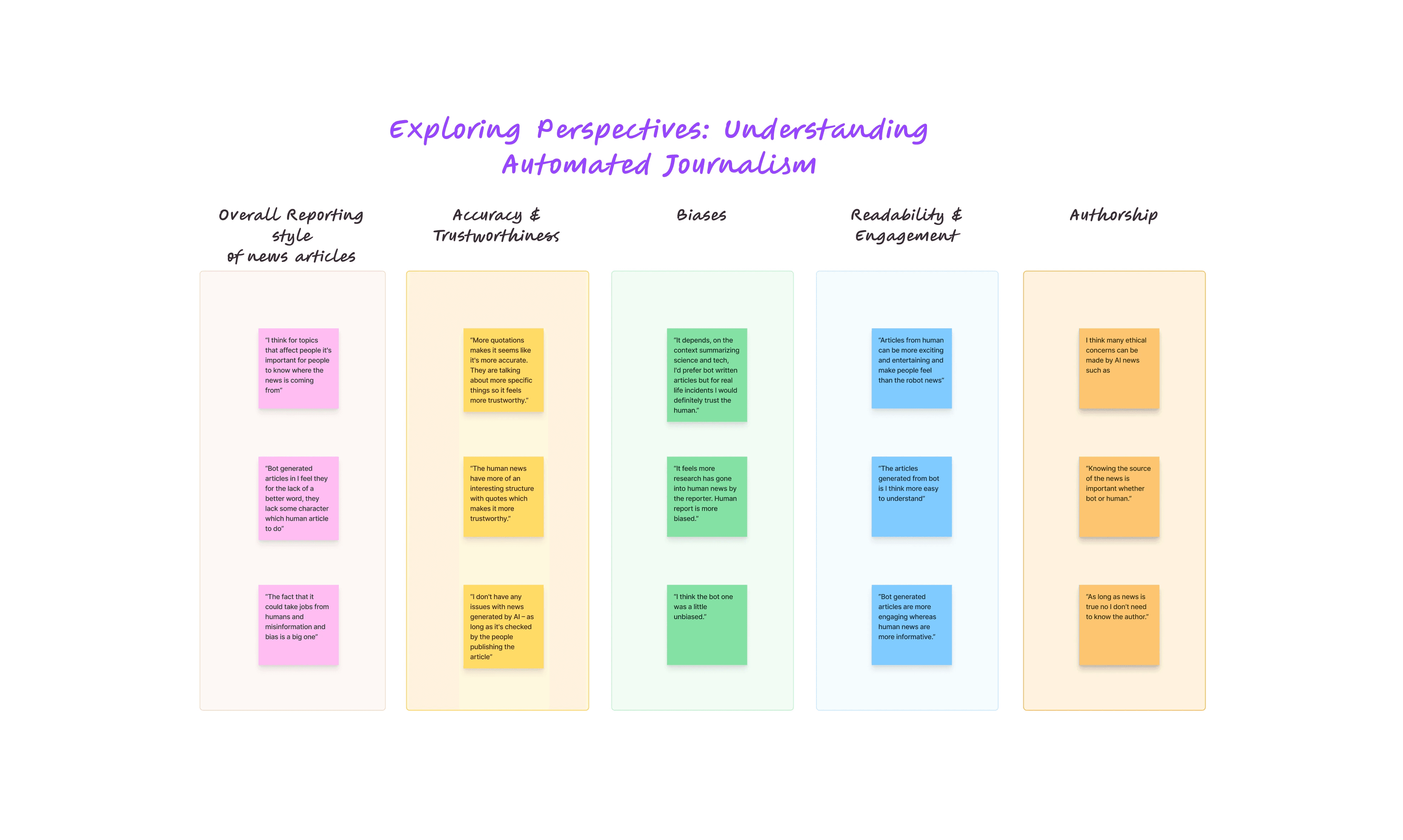
Thematic analysis was used to analyze the data to uncover and interpret recurring patterns and themes within the qualitative data gathered for this research. Significant terms and intriguing elements within the dataset were identified and initially labeled with codes. This process entailed the review and refinement of the codes, with any irrelevant or inadequately substantiated codes being eliminated.
Subsequently, following the coding of the data, they were clustered based on similarities to discern recurring themes. This was an iterative procedure, and the analysis was honed for each individual theme. Distinct names were assigned to each theme, and a further analysis was conducted to establish their relevance to both the research question and existing literature.
Conclusion
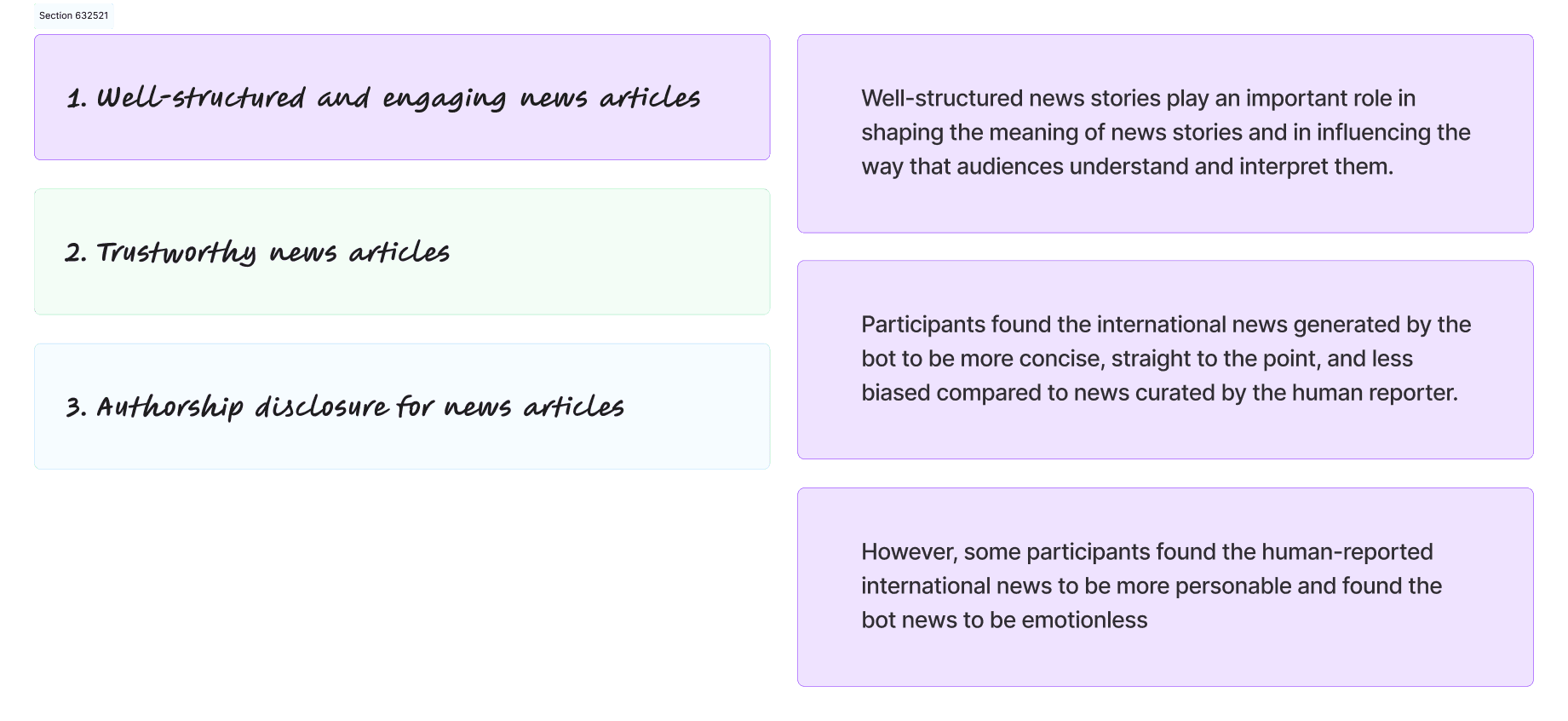
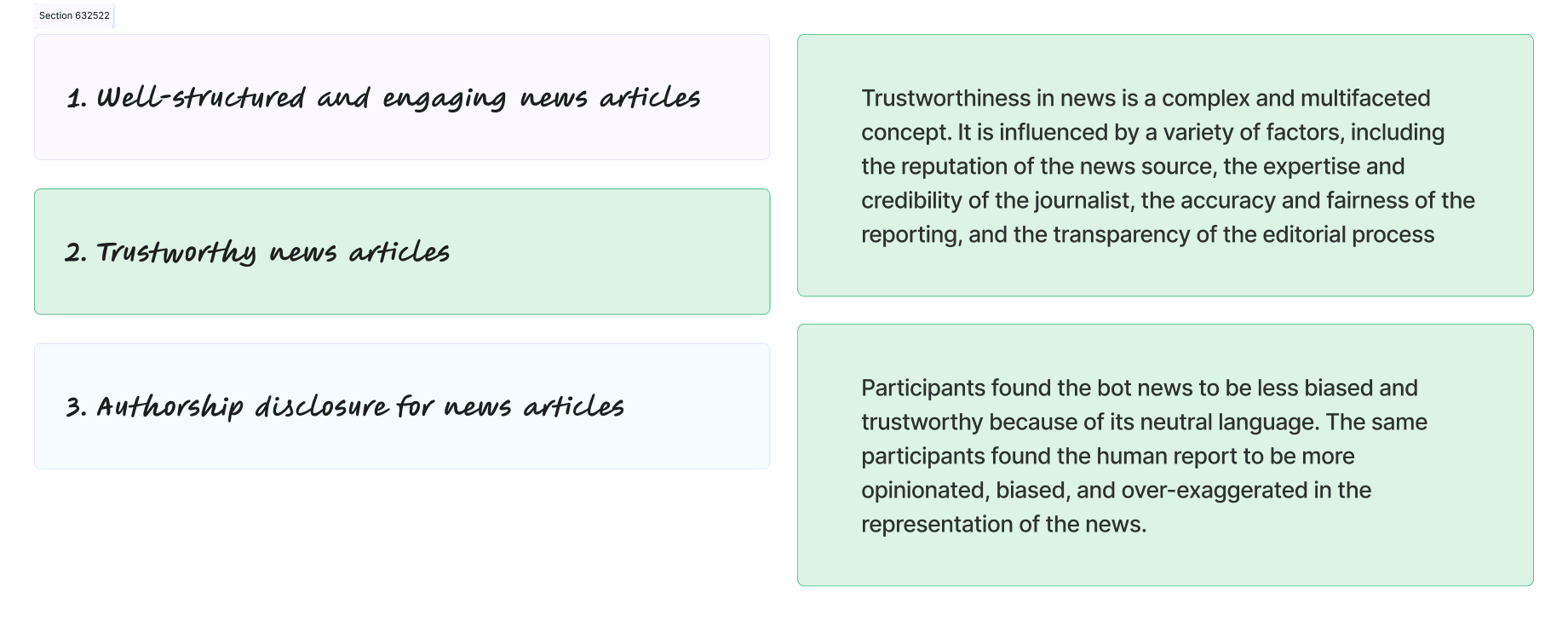
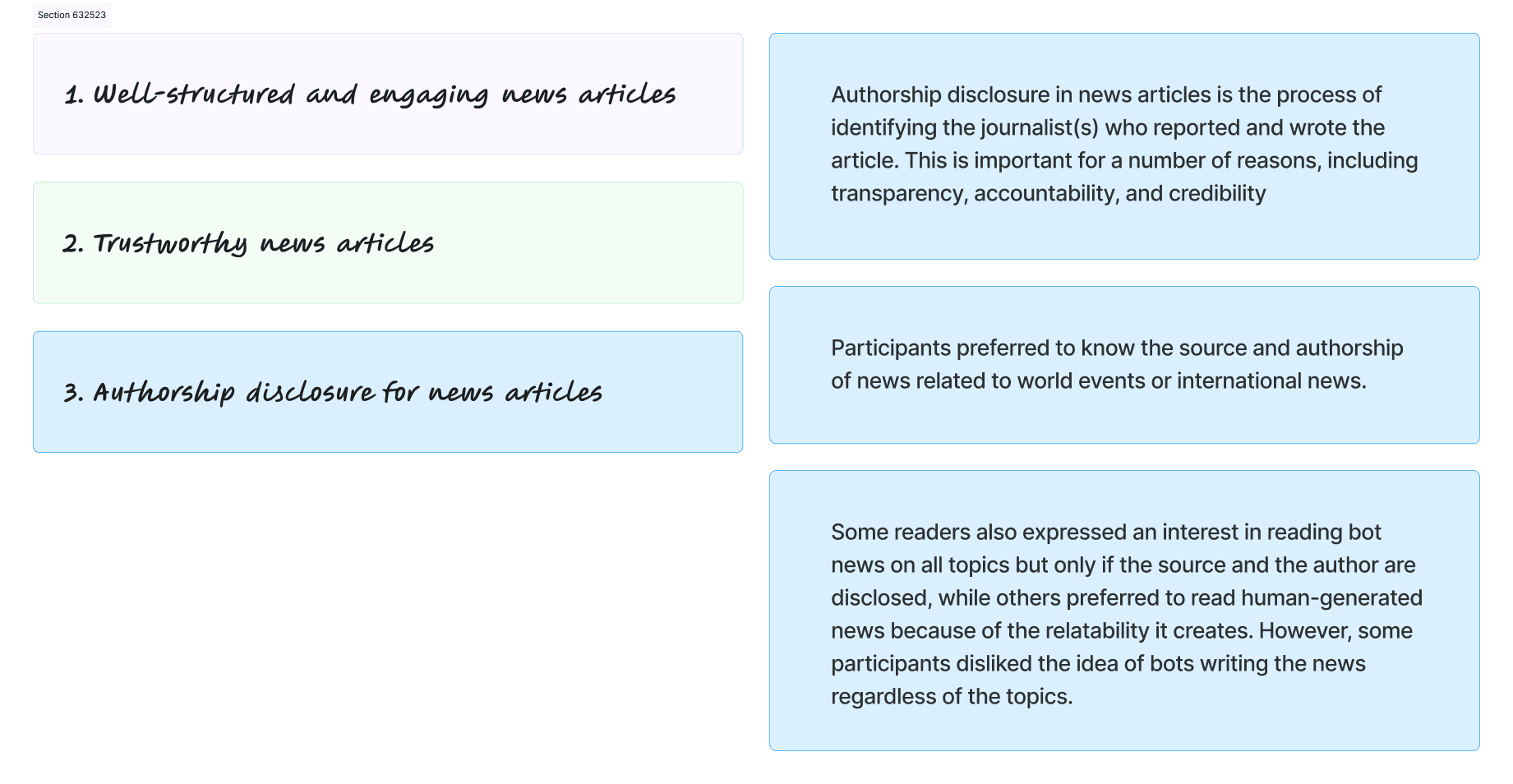
This study examined the readers perception on news articles curated from bots and humans. The results highlight the characteristics of automated news content through the lens of news consumers. The study also highlights the importance of news articles' representation, engagement, and trustworthiness. By implementing authorship on news articles, automated news can be more effective and can build credibility.
Limitations and Future Scope
Although this study makes valuable contributions to the body of knowledge on how people perceive articles generated by algorithms, it is important to acknowledge its various shortcomings. Firstly, the study’s sample size is relatively small, which may limit the generalizability of the findings. Future research should aim to include larger and more diverse sample size to further validate the results. And to explore potential variations in experiences and preferences among different populations.
Secondly, this study primarily relies on self-reported data, which may be subject to biases such as social desirability bias and memory recall. Utilizing additional data collection methods like observation or focus groups could yield a more comprehensive understanding of automated journalism. Thirdly, this study focuses on previous research (Perttu Hämäläinen et al., 2023), which may not encompass all aspects of automated news exploration. Future research should consider an alternate approach to explore readers' perceptions of news curated by bots and humans.
Outcome
Following every interview, the researcher transcribed the interviews word-for-word. To maintain the dependability and precision of the transcripts, the researcher revisited the transcripts while simultaneously listening to the audio recordings.
Thematic analysis was used to analyze the data to uncover and interpret recurring patterns and themes within the qualitative data gathered for this research. Significant terms and intriguing elements within the dataset were identified and initially labeled with codes. This process entailed the review and refinement of the codes, with any irrelevant or inadequately substantiated codes being eliminated.
Subsequently, following the coding of the data, they were clustered based on similarities to discern recurring themes. This was an iterative procedure, and the analysis was honed for each individual theme. Distinct names were assigned to each theme, and a further analysis was conducted to establish their relevance to both the research question and existing literature.
Conclusion
This study examined the readers perception on news articles curated from bots and humans. The results highlight the characteristics of automated news content through the lens of news consumers. The study also highlights the importance of news articles' representation, engagement, and trustworthiness. By implementing authorship on news articles, automated news can be more effective and can build credibility.
Limitations and Future Scope
Although this study makes valuable contributions to the body of knowledge on how people perceive articles generated by algorithms, it is important to acknowledge its various shortcomings. Firstly, the study’s sample size is relatively small, which may limit the generalizability of the findings. Future research should aim to include larger and more diverse sample size to further validate the results. And to explore potential variations in experiences and preferences among different populations.
Secondly, this study primarily relies on self-reported data, which may be subject to biases such as social desirability bias and memory recall. Utilizing additional data collection methods like observation or focus groups could yield a more comprehensive understanding of automated journalism. Thirdly, this study focuses on previous research (Perttu Hämäläinen et al., 2023), which may not encompass all aspects of automated news exploration. Future research should consider an alternate approach to explore readers' perceptions of news curated by bots and humans.
Outcome
Following every interview, the researcher transcribed the interviews word-for-word. To maintain the dependability and precision of the transcripts, the researcher revisited the transcripts while simultaneously listening to the audio recordings.
Thematic analysis was used to analyze the data to uncover and interpret recurring patterns and themes within the qualitative data gathered for this research. Significant terms and intriguing elements within the dataset were identified and initially labeled with codes. This process entailed the review and refinement of the codes, with any irrelevant or inadequately substantiated codes being eliminated.
Subsequently, following the coding of the data, they were clustered based on similarities to discern recurring themes. This was an iterative procedure, and the analysis was honed for each individual theme. Distinct names were assigned to each theme, and a further analysis was conducted to establish their relevance to both the research question and existing literature.
Conclusion
This study examined the readers perception on news articles curated from bots and humans. The results highlight the characteristics of automated news content through the lens of news consumers. The study also highlights the importance of news articles' representation, engagement, and trustworthiness. By implementing authorship on news articles, automated news can be more effective and can build credibility.
Limitations and Future Scope
Although this study makes valuable contributions to the body of knowledge on how people perceive articles generated by algorithms, it is important to acknowledge its various shortcomings. Firstly, the study’s sample size is relatively small, which may limit the generalizability of the findings. Future research should aim to include larger and more diverse sample size to further validate the results. And to explore potential variations in experiences and preferences among different populations.
Secondly, this study primarily relies on self-reported data, which may be subject to biases such as social desirability bias and memory recall. Utilizing additional data collection methods like observation or focus groups could yield a more comprehensive understanding of automated journalism. Thirdly, this study focuses on previous research (Perttu Hämäläinen et al., 2023), which may not encompass all aspects of automated news exploration. Future research should consider an alternate approach to explore readers' perceptions of news curated by bots and humans.